

Riding a motorcycle might look
fun. However, the risks associated with driving one cannot be overlooked. Looking
at the road related accidents in Nepal, most of the riders riding a motorcycle becomes
the victim of the crash. More than this, a report from the Nepal Police reports
that in an average Nepal records 21 % of Motorcycle crash related injuries and
in a day 3.1 number of motorcyclist dies. Bikes being one of the most popular
road transports, has gained wide popularity. But, despite of all the
popularity, two-wheeler is the most dangerous vehicles compared to Cars and other
auto-motives.
Motorcycle riders must be aware and
needs to take necessary precautions to protect themselves from any road-related
mishaps. Being on the vulnerable side, a motorcycle accident can be fatal or
lead to serious injuries. Thus, it is important to be protected. One of the pivotal
and vital organs to protect while driving the motorcycle is protecting the head.
As any injuries on the head can cause death or metal disability, helmets are
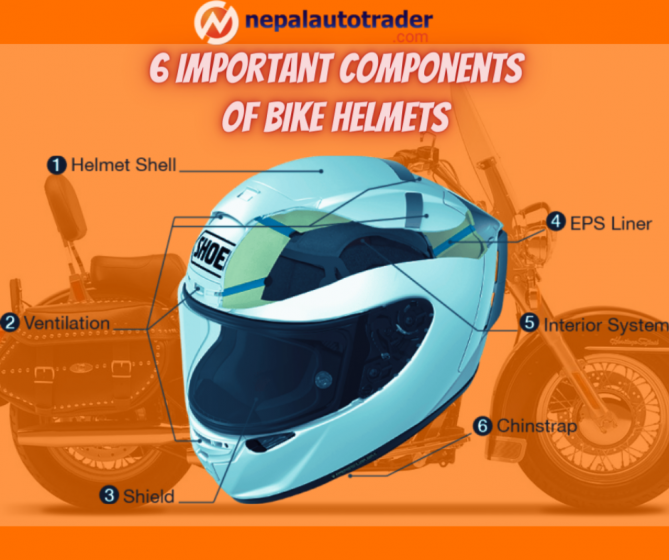
devised or invented by integrating these 6 important components:
The Shell
The shell is the sturdy outer
surface of a helmet. It helps to distribute the impact over a large surface
area by minimizing the impact of the force before reaching the head. Although
sturdy, it compresses if it hits anything hard. It also blocks the penetration of
small, sharp and high-speed objects is obstructed.
Shock-Absorbing Liner
The Shock/Impact-absorbing liner
is a thick layer made of a soft and crushable padded material. It is something like
expanded polystyrene also known as Styrofoam. It helps to absorb the shock at
the time of the accident and protect the head of the rider from electrocution if
the rider head hits on the hard surface.
Comfort Pad
The comfort padding is soft layer
assembled using foam and cloth in order to provide comfort to the head.
Chin Straps
The retention system also known
as a chin strap makes sure that the helmet stays on the head even during
accident. A strap is connected on both side of the shell. It is important that
the riders correctly use the strap at all times.
Vents
Ventilation holes are an integral
part of the helmet as it helps to keep the head cool. It helps protect helmets
from getting stinky, keep the visor fog-free and reduces misting.
Visor
A visor acts as a shield to keep branches from hitting your face. The visor allows you to duck your head and block everything from
hitting your face straight on. In this case, longer bike helmet
visors help more than shorter bike helmet visors.
The helmet manufacturers must
follow certain international safety standard requirements. We will discuss
about it in our next blog.
PREVIOUS NEWS

Nepal Auto-Trader is one-stop platform for all automotive needs. We provide unbiased and unparalleled news/reviews of all auto-motives being launched in Nepalese Auto-Industry. Find recent updates and price of bikes/cars, compare and review recently launched bikes/cars, buy/sell/trade reconditioned cars/bikes and all government news about changing rules and regulation, road safety by subscribing us.

Subscribe to our Newsletter
© Copyright 2026, Nepal Autotrader



.png)
.png)