

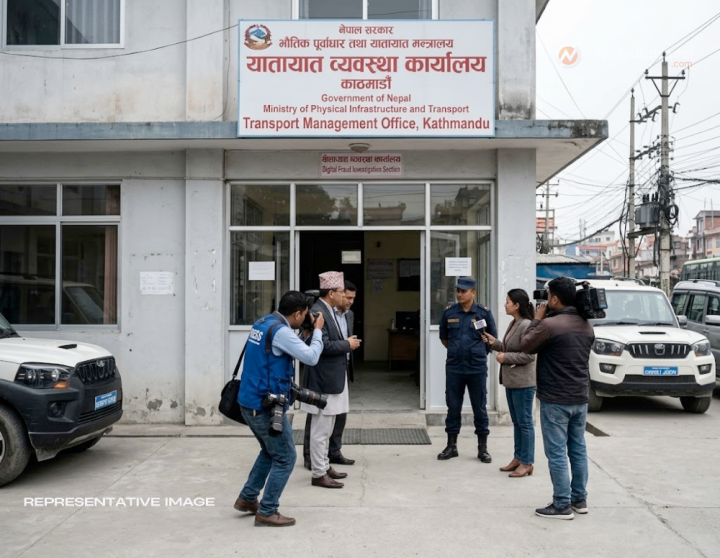
What begins as a routine audit often ends quietly. Not this time. A case has been filed against two employees after authorities uncovered fake details entered into an official system. The breach is not just administrative, it cuts deeper, into trust.
Initial findings suggest that unauthorized or fabricated entries were made within a government-linked system. The nature of those entries, while not fully disclosed, was serious enough to trigger formal legal proceedings. That matters.
This is not a clerical error. It is being treated as deliberate.
The discovery did not come overnight. Investigators flagged inconsistencies during routine verification, where system data failed to match official records. That mismatch became the starting point.
From there, a deeper probe revealed patterns. Repeated anomalies. Identical formatting. Entries that should not exist.
Each point, small on its own, becomes decisive when stacked together. This changes things.
| Aspect | Details | Status |
|---|---|---|
| Number of employees involved | Two | Confirmed |
| Nature of violation | Fake data entry into system | Under investigation |
| Legal action | Case filed | Active |
| Scope of investigation | Possible wider involvement | Ongoing |
The table looks simple. The implications are not. Every manipulated entry raises a question, how many more exist?
This is not about two individuals alone. It is about system integrity. When official platforms are compromised, even at a small level, the ripple effect can be significant.
Consider the broader impact:
In sectors tied to mobility and regulation, even minor data manipulation can distort outcomes. Licensing, compliance, enforcement, all depend on clean data. That matters.
Every breach reveals a weakness. In this case, the focus shifts to internal controls and monitoring mechanisms.
Questions are already being asked:
These are not technical footnotes. They define the difference between prevention and exposure.
The case is now in motion. Legal proceedings will determine accountability, but the administrative response may move faster.
Expect the following steps:
There is also a broader shift underway. Institutions are being forced to rethink how digital trust is maintained.
Because once data credibility is compromised, rebuilding it is far harder than protecting it in the first place. This is where the real story sits.
Q: What exactly did the employees do?
A: The employees are accused of entering fake or manipulated details into an official system. The exact nature of those entries is under investigation.
Q: How many people are involved in the case?
A: As of now, two employees have been formally charged, though authorities are examining whether others may be involved.
Q: What triggered the investigation?
A: The case began after data inconsistencies were detected during verification processes, leading to a deeper probe.
Q: Could this affect public services?
A: Yes, if system data is compromised, it can impact decision-making, compliance, and service accuracy across related sectors.
Q: What actions are expected next?
A: Authorities are likely to conduct expanded audits, tighten system controls, and pursue legal accountability as the investigation progresses.

Nepal Auto-Trader is one-stop platform for all automotive needs. We provide unbiased and unparalleled news/reviews of all auto-motives being launched in Nepalese Auto-Industry. Find recent updates and price of bikes/cars, compare and review recently launched bikes/cars, buy/sell/trade reconditioned cars/bikes and all government news about changing rules and regulation, road safety by subscribing us.

Subscribe to our Newsletter
© Copyright 2026, Nepal Autotrader



.png)
.png)