

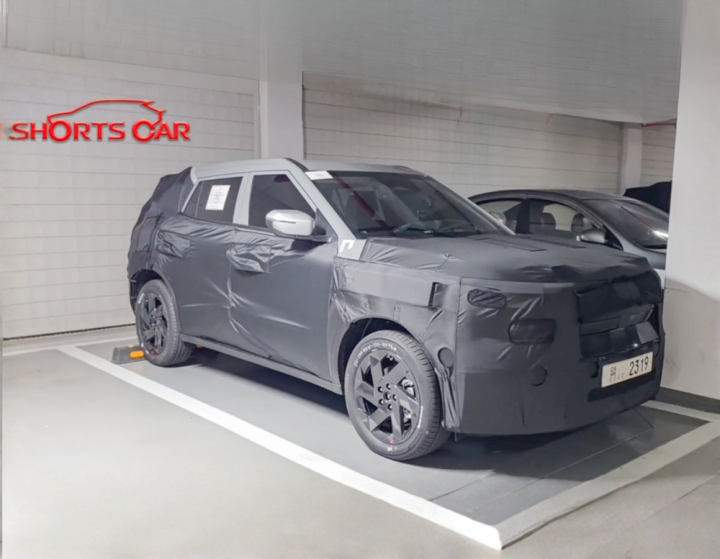
The Korean Parking Lot became an important stage for the new‑gen Creta on Friday, Falgun 29, 2082 (2025 March 13). A sleek silhouette, fully covered in a black‑out parking‑lot wrap, emerged from the shadows. The camera caught the front end – a wider grille, a Pixel‑style lighting cluster and a horizontal LED strip that runs the full width of the bumper. No roof‑rack or roof‑rails were visible, suggesting the low‑spec variant was being evaluated.
That matters because the visual cues line up with Hyundai’s global rollout plan for the KE3 platform. The platform debuted on the Kia Seltos last year and is already being touted as more rigid and lighter than KE2. A sturdier chassis translates to better ride quality and higher safety scores – a win for Nepal’s safety‑conscious buyers.
While the exterior steals the headlines, the under‑body work is where the real evolution happens. The test car rode on 18‑inch wheels wrapped in HanKook tires, a size bump from the current 17‑inch setup. The side mirrors lacked cameras, meaning the 360‑degree view system may be reserved for higher trims.
A quick glance at the rear showed a new bumper with horizontal reflectors and a fresh four‑dot logo on the steering wheel. Inside, the dash sported a larger screen – likely a 10.25‑inch infotainment unit – and a revamped user interface that promises smoother navigation.
Dimensionally, the new Creta looks noticeably larger. Early estimates put the length at about 4,500 mm, up from the current 4,330 mm. Width is also set to increase, though exact figures remain under wraps. The extra bulk should translate into a roomier cabin and a larger boot, a point that resonates with Nepalese families who value cargo capacity for weekend trips to the hills.
A larger footprint also improves road‑presence, a subtle but important factor in crowded Kathmandu traffic. That changes things for drivers who need a vehicle that feels stable in tight lanes.
| Specification | Current Creta | New Creta (Projected) |
|---|---|---|
| Length | 4,330 mm | ≈ 4,500 mm |
| Width | 1,800 mm | ~ 1,820 mm |
| Wheel Size | 17‑inch | 18‑inch |
| Platform | KE2 | KE3 |
| Infotainment | 8‑inch | 10.25‑inch |
Engine options appear unchanged for now – a 1.5 L naturally aspirated petrol, a 1.5 L turbo‑charged petrol, and a 1.5 L diesel. All three will likely continue with 6‑speed manual or automatic gearboxes. What excites enthusiasts is the rumor of a strong‑hybrid version slated for the end of 2026 or early 2027. Hyundai has already hinted at a hybrid‑ready architecture on the KE3 platform, meaning a mild‑hybrid could appear as a cost‑effective bridge before a full‑electric Creta arrives.
The hybrid prospect matters because Nepal’s fuel prices are climbing, and buyers are beginning to look for greener alternatives without sacrificing the SUV feel. A hybrid Creta could capture a segment that currently drifts toward the Toyota Corolla Cross Hybrid.
Hyundai’s Creta dominates the Nepali sub‑compact SUV segment, especially the petrol variant which enjoys a near‑monopoly. The upcoming electric Creta (Creta EV) is already generating buzz, but the internal‑combustion hybrid could keep the model relevant across the full power‑train spectrum.
A tentative launch schedule has emerged from the test‑drive footage and industry chatter:
| Phase | Date | Status |
|---|---|---|
| Final Validation | Q2 2025 | Ongoing in Kathmandu |
| Domestic Launch | Late 2026 | Planned |
| Hybrid Introduction | Early 2027 | Speculative |
If the timeline holds, the new Creta will arrive just as competitors roll out their refreshed 2024‑25 models. The larger dimensions and upgraded tech suite could push the Creta back into the premium‑value niche, forcing rivals to up their game on interior quality and safety equipment.
The market will also feel the ripple effect on pricing. While Hyundai has not disclosed numbers, the added size and tech usually translate to a modest premium – perhaps NPR 200,000 over the current top‑trim. That price point still undercuts the Kia Seltos and Toyota Corolla Cross, preserving the Creta’s value proposition.
Q: When will the new Creta be available in Nepal? A: Hyundai aims to launch the refreshed Creta in late 2026, with deliveries possibly starting in early 2027. A hybrid variant may follow shortly after.
Q: Will the new Creta keep the same engine options? A: Current information suggests the 1.5 L petrol, 1.5 L turbo‑petrol and 1.5 L diesel will remain, complemented later by a strong‑hybrid powertrain.
Q: How much larger will the boot be? A: Exact capacity hasn’t been published, but the length increase of roughly 170 mm should add at least 30 liters of cargo space.
Q: What safety upgrades can we expect? A: Anticipated features include a new Bosch safety suite, larger airbags, and possibly an upgraded driver‑assist package with lane‑keep assist.
Q: Will the 360‑degree camera return on higher trims? A: The test car lacked cameras, indicating the base variant may omit the system, but higher trims are likely to retain the 360‑camera.
Q: How does the new Creta compare to the Kia Seltos on the same platform? A: Both share the KE3 chassis, but the Creta appears slightly longer and may offer a larger infotainment screen, while the Seltos retains a sportier silhouette.
PREVIOUS NEWS

Nepal Auto-Trader is one-stop platform for all automotive needs. We provide unbiased and unparalleled news/reviews of all auto-motives being launched in Nepalese Auto-Industry. Find recent updates and price of bikes/cars, compare and review recently launched bikes/cars, buy/sell/trade reconditioned cars/bikes and all government news about changing rules and regulation, road safety by subscribing us.

Subscribe to our Newsletter
© Copyright 2026, Nepal Autotrader



.png)
.png)