

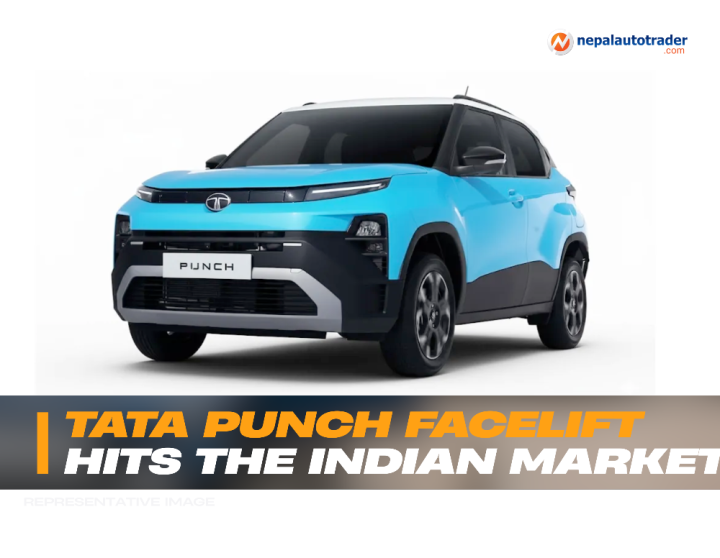
The buzz around the Tata Punch has been humming for weeks, and the facelift finally rolled out in Kathmandu on a crisp January morning. I was at the dealer floor when the first shiny example slipped out of the showroom bay – a black‑striped model that looked like the same little SUV, only sharper. Tata’s most popular compact SUV gets a visual overhaul, a turbo‑charged heart and a price tag that still feels like a bargain for India buyers.
Tata offers three powertrains for the facelift. The entry‑level 1.2 L naturally aspirated petrol engine churns out 87 hp and 115 Nm of torque, enough to zip through Kathmandu’s traffic without screaming. The star of the show is the 1.2 L turbocharged unit, delivering 118 hp and a healthy 170 Nm. It pairs with a six‑speed manual or an optional AMT, giving drivers a smoother hill‑hold experience. For the eco‑conscious, a CNG‑only version produces 72 hp and 103 Nm, and for the first time Tata bundles an AMT with CNG, widening the appeal to fleet operators.
| Variant | Engine | Power | Torque | Transmission |
|---|---|---|---|---|
| NA | 1.2 L NA | 87 hp | 115 Nm | 6‑MT |
| Turbo | 1.2 L Turbo | 118 hp | 170 Nm | 6‑MT / AMT |
| CNG | 1.2 L CNG | 72 hp | 103 Nm | 6‑MT / AMT |
Six trims roll out, starting with the base Smart at 5.59 lakh NPR and topping out at the Premium at 8.99 lakh NPR. The mid‑range Turbo and CNG models sit around 6.5 lakh and 7.2 lakh respectively. All trims receive the new 10.25‑inch touchscreen, wireless Apple CarPlay, Android Auto, dual‑tone dashboard and a 7‑inch digital instrument cluster. Climate control, rear AC vents and a 360‑degree camera are reserved for the higher trims, while the top‑end gets an eight‑speaker Harman sound system.
Tata didn’t just slap a new front grille on the Punch; it added a full‑width LED daytime running light, a re‑shaped bumper with silver inserts and a sleek LED tail‑light bar that stretches the car’s width visually. Inside, the steering wheel is now two‑spoke and the seats sport a subtle quilted pattern. Safety has been beefed up with six airbags, rear parking sensors, a tyre‑pressure monitoring system, hill‑hold and descent control, plus a 360‑camera that mirrors what you’d expect in a much pricier SUV.
In Nepal’s sub‑4 million SUV segment the Punch now squares off against the Maruti Ignis, Hyundai Grand i10 Nios, Kia Sonet and Mahindra KUV100. The Ignis still leads on fuel efficiency, but the Punch’s turbo power and CNG option give it a unique edge. Kia’s Sonet feels more premium but starts at a higher price point, while the Grand i10 Nios lacks the rugged stance that appeals to Nepali buyers who often tackle uneven roads.
Tata sold over 30,000 Punch units in India during 2023, and the brand reports a 20 % increase in pre‑bookings for the facelift. Analysts predict the new Punch could capture roughly 15 % of the compact SUV market here, nudging the segment’s overall growth by 2‑3 percentage points. If the turbo model gains traction, it could also push other manufacturers to offer more performance‑oriented variants in the price band.
The Tata Punch facelift feels like a confident step forward. It keeps the playful, city‑friendly dimensions that made the original a hit, but adds a turbo heart, a cleaner interior and a safety suite that rivals bigger rivals. For Nepali drivers who want a small SUV that can handle the hills, the occasional highway stretch and still look good at a traffic light, the Punch now looks like a very sensible choice.

Nepal Auto-Trader is one-stop platform for all automotive needs. We provide unbiased and unparalleled news/reviews of all auto-motives being launched in Nepalese Auto-Industry. Find recent updates and price of bikes/cars, compare and review recently launched bikes/cars, buy/sell/trade reconditioned cars/bikes and all government news about changing rules and regulation, road safety by subscribing us.

Subscribe to our Newsletter
© Copyright 2026, Nepal Autotrader



.png)
.png)