

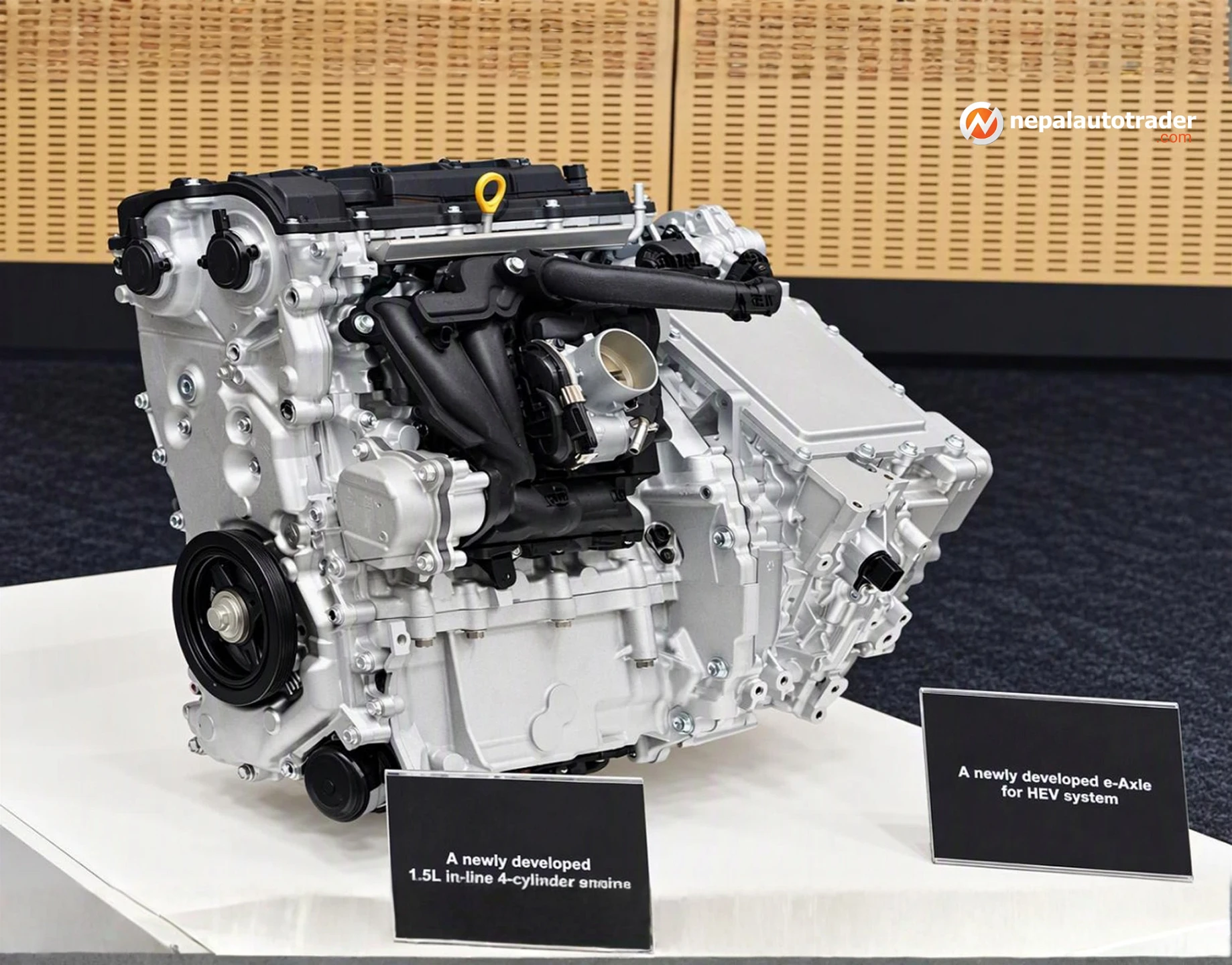
Toyota is taking another serious look at the petrol engine. This time, the focus is not simply on extracting more power or making an existing engine cleaner. The Japanese manufacturer has developed a new generation of 1.5-litre four-cylinder engines designed specifically to work with hybrid and plug-in hybrid powertrains.
The development is significant because Toyota is approaching the engine as part of a larger electrical and mechanical system. Its new modular unit will come in naturally aspirated and turbocharged versions, with the company claiming fuel consumption can fall by more than 15% through the combined improvements.
There is no confirmed production vehicle or commercial launch date yet. Still, the engineering direction offers a useful look at how Toyota intends to keep combustion engines relevant as electrification gathers pace.
The 1.5-litre engine is not an entirely new idea for Toyota. The company already uses engines in this displacement class, alongside larger 1.8-litre units. What makes the latest development different is its architecture and the way Toyota intends to integrate it into future electrified vehicles.
According to the report, the new engine is a modular four-cylinder design and is considerably smaller than the company's existing 1.5-litre and 1.8-litre engines. Toyota is developing two configurations, naturally aspirated and turbocharged, allowing the architecture to serve different vehicle and powertrain requirements.
That flexibility matters. A naturally aspirated engine and a turbocharged engine can serve different performance and efficiency targets, while a shared modular foundation could help Toyota develop a wider range of applications.
More importantly, the engine has not been developed in isolation. Toyota is engineering it alongside a new hybrid system and power electronics, with the engine, electric motor and power control unit designed to work together.
Toyota's efficiency claim is based on several engineering improvements rather than one major mechanical change. The company says the new technology can reduce fuel consumption by more than 15%.
Three areas are central to the development.
The third point deserves attention. Hybrid efficiency is not determined by the petrol engine alone. Energy conversion, motor operation and power management all influence how much fuel a vehicle consumes.
By developing the mechanical and electrical systems together, Toyota is trying to improve the entire powertrain rather than relying on incremental improvements to the engine itself.
| Development area | Engineering direction | Expected benefit |
|---|---|---|
| Engine architecture | New modular four-cylinder design | Smaller engine package |
| Combustion options | Naturally aspirated and turbocharged | Different application requirements |
| Mechanical efficiency | Reduced internal friction | Lower mechanical energy losses |
| Thermal management | Improved heat management | Better operating efficiency |
| Electrical integration | Engine, motor and power control unit integration | Reduced electrical energy losses |
| Fuel consumption | Combined system improvements | More than 15% reduction claimed by Toyota |
There is an important qualification here. The reported improvement is Toyota's technology claim. The source does not provide a vehicle-specific test result, an official consumption figure or the test conditions used to establish the reduction.
The new engine family is intended for both hybrid electric vehicles (HEVs) and plug-in hybrid electric vehicles (PHEVs). These systems use petrol engines and electric motors differently, which makes flexibility in engine design valuable.
A conventional hybrid relies on its onboard system to manage electrical energy and petrol consumption. A plug-in hybrid adds external charging, allowing the vehicle to use stored electricity for driving before relying more heavily on its combustion engine.
Both systems benefit when the petrol engine can operate efficiently alongside the electric components. Toyota's integrated approach aims to improve that relationship.
The naturally aspirated and turbocharged configurations also give the manufacturer more freedom when adapting the architecture to different vehicle requirements. However, Toyota has not yet disclosed which models will receive the engines or how the two configurations will be distributed across its range.
The engine development also connects with Toyota's wider multi-pathway strategy. The company has faced criticism for moving more cautiously into battery electric vehicles than some competitors. Its response has been to continue developing several powertrain technologies rather than treating battery electric vehicles as the only long-term solution.
One particularly interesting aspect is the architecture behind this approach. Toyota is developing a new platform concept with electric vehicles at its centre, while also allowing petrol, hybrid and plug-in hybrid powertrains to be accommodated.
This reverses a more familiar industry approach. Traditionally, manufacturers have often started with a petrol vehicle platform and adapted it to create an electric vehicle. Toyota's reported direction places electrification at the centre of the architecture while retaining room for combustion-based powertrains.
The strategy is designed to give the company more flexibility as customer demand and regional regulations change. Hybrid demand in the United States is also identified in the report as an important factor behind the development.
There is a practical argument behind this approach. Charging infrastructure, electricity costs and consumer preferences differ widely between markets. A manufacturer with competitive hybrid and plug-in hybrid technology can continue serving customers who are not ready to move entirely to battery electric vehicles.
The technology is promising, but several important details remain undisclosed. Toyota has not announced engine power, torque, compression ratio, dimensions, vehicle applications or a commercial introduction schedule in the source report.
Those figures will matter when the engine moves closer to production. A smaller package and improved fuel efficiency are useful, but buyers and engineers will also want to know how the new units perform under acceleration, sustained highway driving and demanding operating conditions.
The next developments to watch include:
Toyota's development is a reminder that the future of the car industry is unlikely to follow one simple route. Battery electric vehicles remain an important part of the transition, but the petrol engine is still receiving serious engineering investment.
The interesting question is no longer whether combustion engines can become more efficient. It is how much further manufacturers can push them when they are designed from the beginning to work with electric technology. Toyota's new 1.5-litre engine is another step in that direction.
Q: What is Toyota's new 1.5-litre hybrid engine?
A: It is a new modular four-cylinder petrol engine developed for hybrid and plug-in hybrid vehicles. Toyota is developing naturally aspirated and turbocharged versions.
Q: How much more fuel efficient is Toyota's new 1.5L engine?
A: Toyota claims the new technology can reduce fuel consumption by more than 15%. The source does not provide a vehicle-specific test result or detailed testing conditions.
Q: Will Toyota's new engine be turbocharged?
A: Yes. Toyota is developing both naturally aspirated and turbocharged configurations. The company has not disclosed their individual power and torque figures.
Q: Which Toyota models will use the new 1.5L engine?
A: Toyota has not announced specific production models in the source report. The engine family is being developed for hybrid and plug-in hybrid applications.
Q: Is the new Toyota engine smaller than its current engines?
A: Toyota says the new modular engine is smaller than its existing 1.5-litre and 1.8-litre engines. Exact dimensions have not been disclosed.
Q: When will Toyota launch the new hybrid engine?
A: Toyota has not announced a confirmed production or market launch date. Further details about vehicle applications and commercial availability are still awaited.

Nepal Auto-Trader is one-stop platform for all automotive needs. We provide unbiased and unparalleled news/reviews of all auto-motives being launched in Nepalese Auto-Industry. Find recent updates and price of bikes/cars, compare and review recently launched bikes/cars, buy/sell/trade reconditioned cars/bikes and all government news about changing rules and regulation, road safety by subscribing us.

Subscribe to our Newsletter
© Copyright 2026, Nepal Autotrader



.png)
.png)