

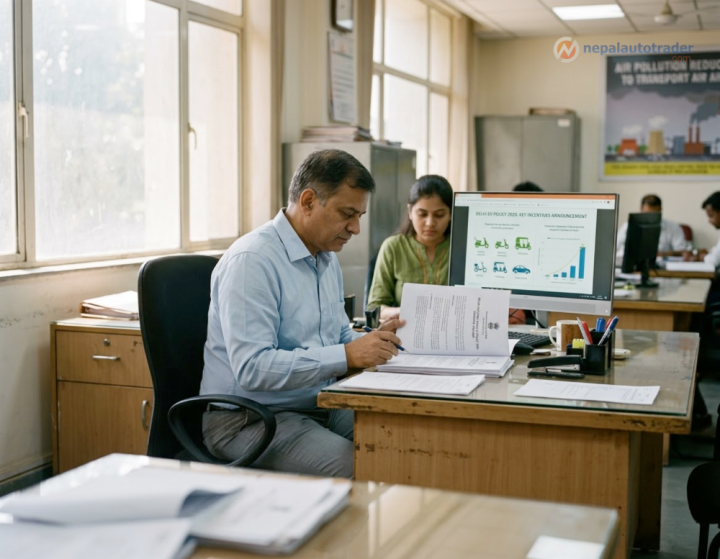
Delhi’s transport department released a multi‑pronged plan under the EV Policy 2026. The headline is a ₹1 lakh cash incentive for owners who scrap a vehicle that is BS‑IV or older and replace it with a zero‑emission car priced at ₹15 lakh or less. The scheme is capped at 1 lakh beneficiaries – a number that will fill quickly once the budget is signed.
The package also touches two‑ and three‑wheelers, which form a huge share of Delhi’s streets. Owners of electric two‑wheelers can claim ₹10,000, while electric three‑wheelers qualify for ₹25,000. These amounts sit on top of the main car incentive, creating a tiered support system.
A further, perhaps more game‑changing, element is the full exemption from road tax and registration fees for any EV registered before 31 December 2030. That removes a recurring cost that has traditionally discouraged buyers.
The capital has been wrestling with air‑quality crises for years. By making EVs financially attractive, the government hopes to cut tailpipe emissions dramatically. The tax waiver alone can save owners ₹20,000‑₹30,000 per year, a figure that adds up over a decade.
The limited‑time nature of the incentive also creates urgency. When a policy promises a finite pool of ₹1 lakh grants, the market typically reacts with a surge in bookings and dealer footfall. That matters because it can accelerate the rollout of charging infrastructure, which the plan also funds.
| Phase | Key Date | Status / Details |
|---|---|---|
| Policy announcement | 6 Chait 2082 (Friday) | Public statement by Delhi Transport Department |
| Budget tabling | Next week (exact date TBD) | Expected inclusion in Delhi’s annual budget |
| Incentive activation | 1 January 2026 | Owners can start applying after registration opens |
| Tax exemption end | 31 December 2030 | All EVs registered before this date enjoy full waiver |
Analysts predict that the ₹1 lakh rebate could push EV sales in Delhi up by 30‑40 % in the first year alone. The tax exemption adds a long‑term savings layer, making EV ownership financially viable for middle‑income families.
Dealers are already preparing special finance packages, and manufacturers have hinted at limited‑edition trims to meet the price ceiling. If the 1 lakh beneficiary cap is reached quickly, we could see a secondary wave of policy lobbying for an extension.
The plan also earmarks funds for expanding public charging stations across key corridors, installing home‑charging solutions, and building a structured battery‑recycling system. Those infrastructure moves are essential; without them, the incentive would be a hollow promise.
The policy will be formally introduced in the upcoming budget session. Once approved, an online portal is expected to launch where owners can file applications, upload scrappage certificates, and track incentive disbursement.
Manufacturers will need to align their pricing strategies to stay under the ₹15 lakh ceiling, possibly prompting more compact EV models to enter the market. The tax‑free window until 2030 gives them a decade to plan model cycles and battery upgrades.
For buyers, the window is narrow but lucrative. The combination of cash rebate, tax relief, and ancillary support for two‑ and three‑wheelers creates a compelling value proposition that could finally tip the scale toward mass EV adoption in Delhi.
Q: Who is eligible for the *₹1 lakh* car incentive? A: Any Delhi resident who owns a BS‑IV (or older) passenger car and scrapes it through an authorized centre, then purchases a new EV priced at ₹15 lakh or less.
Q: Can the incentive be combined with other state or central subsidies? A: Yes, the Delhi incentive is additive to any central government EV subsidies that may be in place at the time of purchase.
Q: What documentation is required to claim the rebate? A: Proof of scrappage (certificate from a certified dismantler), purchase invoice of the new EV, and Delhi vehicle registration documents.
Q: How does the tax exemption work for EVs registered after 2026? A: Any EV registered before 31 December 2030 will enjoy a full waiver of road tax and registration fees for the entire period, regardless of purchase year.
Q: Are there any limits on the two‑ and three‑wheelers incentives? A: The ₹10,000 (two‑wheelers) and ₹25,000 (three‑wheelers) supports are part of the same 1 lakh beneficiary pool, so they are subject to the overall cap.
Q: When will the online application portal be live? A: The portal is expected to go live shortly after the budget is passed, likely in early 2026, with a rollout period of a few weeks for testing.

Nepal Auto-Trader is one-stop platform for all automotive needs. We provide unbiased and unparalleled news/reviews of all auto-motives being launched in Nepalese Auto-Industry. Find recent updates and price of bikes/cars, compare and review recently launched bikes/cars, buy/sell/trade reconditioned cars/bikes and all government news about changing rules and regulation, road safety by subscribing us.

Subscribe to our Newsletter
© Copyright 2026, Nepal Autotrader



.png)
.png)