

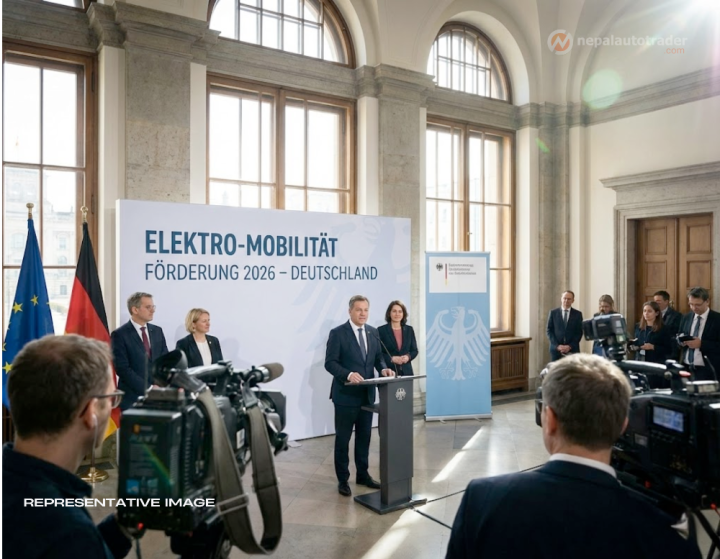
The German environment ministry disclosed that the previous EV incentive expired in 2023, and sales stalled sharply. By re‑injecting €3 billion, the government hopes to reignite demand before the 2029 deadline. The numbers are not arbitrary; the ministry calculated that 800,000 electric cars would need a price‑cut of roughly €5,000 to hit the target. That matters because it directly translates into a measurable shift in fleet emissions.
Applicants receive a flat rebate that scales with the vehicle’s price and battery size. The lowest tier, €1,500, applies to compact city EVs under €30,000. The top tier, €6,000, is reserved for midsize models priced between €40,000 and €55,000 that meet a minimum 50 kWh battery capacity. The grant is paid directly to the buyer at point of sale, reducing the sticker price instantly. This changes things for households that previously found EVs out of reach.
Unlike Britain or France, Germany’s new rules do not exclude Chinese brands. Bloomberg reported that the subsidy will be available to every manufacturer that sells in the German market, provided the vehicle meets the technical criteria. Minister Kirsten Snyder emphasized that there is “no evidence of a flood of Chinese cars in Germany,” and that the policy is about competition, not protectionism. BYD, Nio and Xpeng can now compete for the same public funds as Volkswagen and Tesla.
Analysts say the open‑door approach will broaden the consumer market dramatically. Low‑ and middle‑income families, who previously faced a €10,000‑plus premium for an EV, will see the gap shrink to roughly €5,000 after the rebate. This is expected to boost overall EV market share from the current 15 % to near 25 % by 2026. The policy also forces legacy OEMs to accelerate price cuts or add value, intensifying the European EV market race.
If the subsidy hits its target, Germany will have added 800,000 electric cars to its roads, cutting CO₂ emissions by an estimated 120 million tonnes. The influx of Chinese brands could also reshape supply chains, with more local assembly plants and battery gigafactories. The ministry plans a mid‑term review in 2025 to adjust grant levels based on uptake. That matters because it signals a willingness to fine‑tune the program rather than let it stagnate.
Q: How much will a typical compact EV cost after the grant? A: A compact model priced at €28,000 could receive the full €1,500 rebate, bringing the out‑the‑door price to €26,500.
Q: When does the subsidy program start and end? A: The scheme launches in January 2026 and runs through December 2029, with a possible review in 2025.
Q: Are there any brand‑specific restrictions? A: No. The environment ministry confirmed that eligibility is based solely on vehicle specifications, not country of origin.
Q: Will the grant apply to used EVs? A: The current wording limits the rebate to new‑vehicle purchases only.
Q: How does this compare to the UK’s EV incentive? A: The UK caps its grant at £2,500 and excludes most Chinese manufacturers, making Germany’s program both larger in scale and more inclusive.
Q: Where can I find a list of eligible models? A: The ministry will publish an online catalogue in early 2026; a preliminary list is available on the German Federal Ministry for the Environment website.

Nepal Auto-Trader is one-stop platform for all automotive needs. We provide unbiased and unparalleled news/reviews of all auto-motives being launched in Nepalese Auto-Industry. Find recent updates and price of bikes/cars, compare and review recently launched bikes/cars, buy/sell/trade reconditioned cars/bikes and all government news about changing rules and regulation, road safety by subscribing us.

Subscribe to our Newsletter
© Copyright 2026, Nepal Autotrader



.png)
.png)