

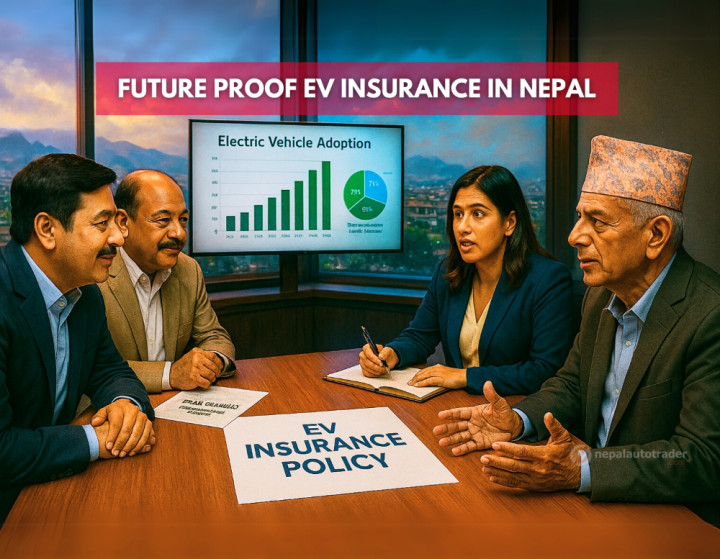
EVs in Nepal are growing, but insurance policies aren’t keeping up
Batteries, charging stations, and software need dedicated coverage
NADA and Nepal Insurance Authority are teaming up to address the gaps
Recommendations include usage-based premiums, battery coverage, and public education
Electric vehicles are catching on fast in Nepal, thanks to rising fuel costs, import duties, and climate concerns. But here’s the problem: insurance policies still treat EVs like regular fuel-based cars.
That’s a mismatch. EVs have different parts, risks, and needs—especially when it comes to batteries, software, and charging. So the policies need to evolve.
Batteries are the heart—and the most expensive part—of an EV. They degrade over time and can be tricky to replace. Most insurance policies don’t factor this in.
What’s missing:
Coverage for battery wear and tear
Replacement costs
Safety issues linked to battery failure
Whether it’s a home setup or a public charger, charging stations involve electricity, heat, and hardware.
Insurance needs to cover:
Fire hazards
Equipment breakdowns
Installation damages
EVs run on more software than traditional vehicles. That opens the door to bugs, glitches, and even cyberattacks.
Policies should include:
Protection against software malfunction
Cybersecurity coverage for critical systems
Electric vehicles depreciate differently than traditional cars. This impacts how total loss and replacement values are calculated.
Insurers need to:
Adjust value models to reflect EV-specific depreciation
Update claim frameworks accordingly
NADA and the Nepal Insurance Authority have started working together to build new EV-specific policies. Their focus is on:
Clear, transparent policy structures
Realistic risk models
Engaging with manufacturers and EV users
This is the first serious step toward modernizing how Nepal insures electric mobility.
Nepal doesn’t have to start from scratch. Other countries with mature EV markets have already made headway.
Here’s what’s working elsewhere:
Standardized insurance for batteries and electronics
Discounts for eco-driving and low-mileage usage
Risk-pooling for charging infrastructure
To move in the right direction, here’s what needs to happen:
All-in-One Coverage: Policies must include batteries, software, charging equipment, and resale factors
Usage-Based Premiums: Pricing should reflect real driving habits and mileage
Charging Station Insurance: Coverage for station owners and public utilities
Public Education: People need to understand how EV insurance works—what’s covered, what’s not
Strong Regulation: A proper framework must ensure consistency, transparency, and trust
Nepal’s EV market is at a tipping point. The cars are here, the buyers are ready—but the insurance world is playing catch-up.
This is the moment to rethink how we insure electric mobility. With tailored policies, smarter pricing, and better public understanding, we can support the EV revolution—and keep the wheels turning safely.

Nepal Auto-Trader is one-stop platform for all automotive needs. We provide unbiased and unparalleled news/reviews of all auto-motives being launched in Nepalese Auto-Industry. Find recent updates and price of bikes/cars, compare and review recently launched bikes/cars, buy/sell/trade reconditioned cars/bikes and all government news about changing rules and regulation, road safety by subscribing us.

Subscribe to our Newsletter
© Copyright 2026, Nepal Autotrader



.png)
.png)